
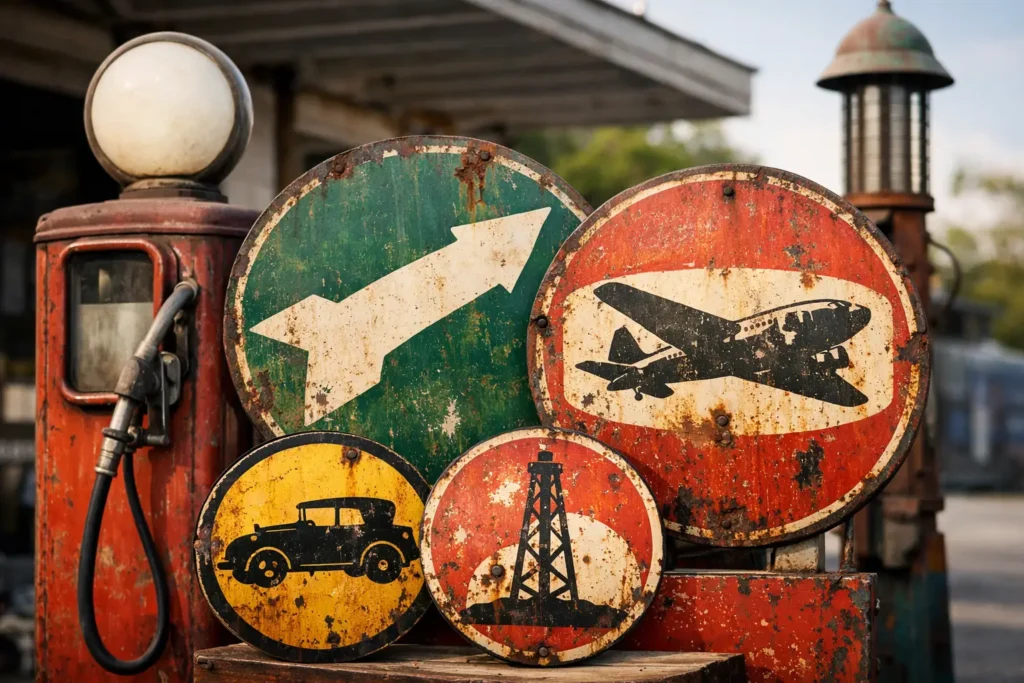
The best vintage petrol signs are not always the flashiest pieces in the room. More often, they are the signs that still carry honest age, strong graphics, and real company history without being cleaned to death or dressed up into something they were never meant to be. If you have spent any time around original gas and oil advertising, you already know the difference. One sign stops you because it has presence. Another just looks old.
That is why this category keeps pulling serious collectors back in. Petrol signs sit right at the intersection of Americana, automobilia, graphic design, and roadside history. They work on a garage wall, in a showroom, behind a bar, or in a serious sign collection. But not every name, shape, or condition level deserves the same attention, and not every expensive sign is automatically a great buy.
What makes the best vintage petrol signs stand out
The short answer is originality, graphics, and scarcity. The longer answer is a little more honest. A sign can be rare and still be hard to live with if the colors are dead, the restoration is heavy-handed, or the design simply does not have much visual punch. On the other hand, a common brand sign with great porcelain gloss, strong color, and clean script can outperform a rarer piece in pure display value.
Material matters too. Porcelain enamel signs usually lead the pack because they were made to survive weather, and many still show rich color and gloss even after decades outdoors. Tin signs can be outstanding, especially early examples with great lithography, but they generally took abuse harder and often turn up with more field wear. Die-cut shapes, pump plates, dealer signs, and station directional pieces can all be strong, but the best examples combine shape, brand recognition, and originality.
For most buyers, the sweet spot is a sign that checks three boxes. It has a major oil or fuel brand people recognize, it shows authentic age without serious distraction, and it has enough size or shape to command a wall. That balance is where collecting gets interesting.
12 best vintage petrol signs collectors keep chasing
Shell scallop signs
If you want one of the safest bets in the category, start with Shell. The scallop shape is one of the strongest designs in petrol advertising, and it reads from across a room. Early porcelain examples with deep yellow and red color have broad appeal, which means decorators want them and collectors want them too. That cross-demand keeps them moving.
The trade-off is obvious. Great Shell signs are rarely cheap, and the most desirable examples are heavily copied. Still, if the porcelain is right and the wear is honest, a real Shell scallop is hard to beat.
Texaco star signs
Texaco has one of the cleanest and most recognizable logos ever put on a service station. A strong porcelain Texaco star sign brings instant visual impact, especially larger single-sided or double-sided examples. The red star against white field just works.
Condition plays a big role here. Edge chips are expected, but heavy touch-up or fantasy aging kills the piece. Original station-used signs with good gloss and balanced wear usually bring the strongest collector confidence.
Gulf signs with bold orange and blue
Good Gulf signs have color that almost jumps off the wall. The orange disc with blue lettering is simple, bold, and unmistakably period. These signs do especially well in automotive spaces because they pair naturally with race, garage, and oil memorabilia.
Some Gulf pieces are easier to find than others, so rarity can vary a lot by style and era. Early porcelain examples and unusual die-cut forms tend to stand above the more common later pieces.
Mobilgas Pegasus signs
Few images in advertising have the appeal of the Pegasus. Mobilgas signs, especially porcelain examples featuring the red horse, are among the most desirable in the field. They have movement, color, and a level of brand nostalgia that reaches beyond hardcore collectors.
The catch is that Pegasus signs are heavily reproduced, and some altered examples have fooled buyers for years. This is one of those categories where seller knowledge matters as much as the sign itself.
Sinclair dinosaur signs
Sinclair knew exactly what it was doing with Dino. These signs remain popular because they are playful without losing their roadside authority. A strong Sinclair porcelain sign, especially one with the green dinosaur and clean typography, appeals to collectors, diners, garages, and commercial interiors alike.
Because the imagery is so iconic, even worn originals have charm. That said, condition still separates the average from the exceptional. Strong gloss and unfaded green go a long way.
Phillips 66 shield signs
The Phillips 66 shield has a shape that collectors love. It is clean, balanced, and unmistakably American. Porcelain shield signs display well in almost any setting and fit naturally with automotive collections.
This is a good example of design doing half the work. Even people who are not deep into petrol advertising tend to recognize and respond to the logo. That broad appeal gives strong originals lasting value.
Standard Oil and Esso signs
Standard Oil material carries serious historical weight. Depending on the region and era, you will also see Esso examples that connect directly to early American fuel history. These signs often appeal to more advanced collectors because they tie into larger stories about oil branding, station development, and regional distribution.
Not every Standard or Esso sign is a visual knockout, but the better porcelain pieces combine history and presence in a way later signs sometimes do not.
Pure Oil signs
Pure Oil signs often bring a softer, more refined look than some of the bolder competitors. Blue and white porcelain examples can be outstanding display pieces, especially in cleaner collections where design matters as much as brute brand recognition.
They do not always draw the same instant reaction as Shell or Texaco, but that can work in a buyer’s favor. There is value here if you know what you are looking at.
Cities Service clover signs
The green clover design gives Cities Service signs a distinct identity. Good porcelain examples have plenty of visual appeal and enough brand recognition to anchor a wall. They are often bought by collectors who want something a little different from the standard top-tier names.
This is where taste starts to matter more. A Cities Service sign may not outperform a major Pegasus in every room, but in the right collection it absolutely holds its own.
Conoco triangle signs
Conoco signs, especially early triangle forms, have strong period character. They are not always the first name newer buyers chase, but advanced collectors know the better examples can be tough to replace. Shape matters here as much as brand.
When you find one with original surface, balanced wear, and good color, it tends to feel right immediately. That instinct matters more than people admit.
Marathon signs
Marathon signs have loyal followers, and the better porcelain examples bring strong color and clean branding. They fit especially well in collections centered on Midwestern fuel history or regional station advertising.
These can still offer room compared with more famous names, although top examples are no bargain anymore. Good originality is getting harder to find across the board.
Union 76 signs
Union 76 signs have outstanding display value because the orange ball design is so visually strong. Even buyers who lean more toward decor than hardcore collecting are drawn to them. In the right room, a large original 76 sign can carry the whole space.
Later examples are more available, so the challenge is separating true period pieces from signs that are merely old enough to look the part.
How to judge the best vintage petrol signs before you buy
Originality comes first. If a sign has been over-restored, repainted, or built as a reproduction, the conversation changes immediately. For serious buyers, the whole point is owning a real company-issued survivor. Honest chips, edge wear, mounting damage, and age staining are part of that story. Fake perfection usually is not.
Porcelain should have depth and character, not a flat modern look. Lettering should match known originals in size, spacing, and font. Mounting holes deserve attention because altered holes can be a clue that something has been tampered with or repurposed. Backside construction, flange shape, and steel thickness can also tell you a lot.
It also pays to think about display value versus collector value. A scarce regional sign with average graphics may be the right buy for an advanced collection. A bold Shell or Sinclair porcelain might be the better buy if you want one great sign that earns its wall space every day.
Best vintage petrol signs for display versus investment
Some signs are pure wall power. Pegasus, Shell scallops, Texaco stars, and Union 76 balls grab attention fast and suit a wide range of interiors. If your goal is impact, these names usually make sense.
Others are more collector-driven. Standard Oil, early Conoco, unusual station signs, and scarce regional fuel brands may not hit as hard with casual buyers, but they can be more difficult to replace and more satisfying to own long term.
That is why the best buy depends on your lane. If you are building a room, buy what reads well at a distance and still holds up close. If you are building a collection, buy what you may not see again soon. At Road Relics, that difference matters because strong original stock is not just decoration – it is history you can hang on the wall.
The smart buy is not always the rarest sign or the most expensive one. It is the original piece you still want to look at ten years from now, because real petrol advertising has a way of earning its place over time.