
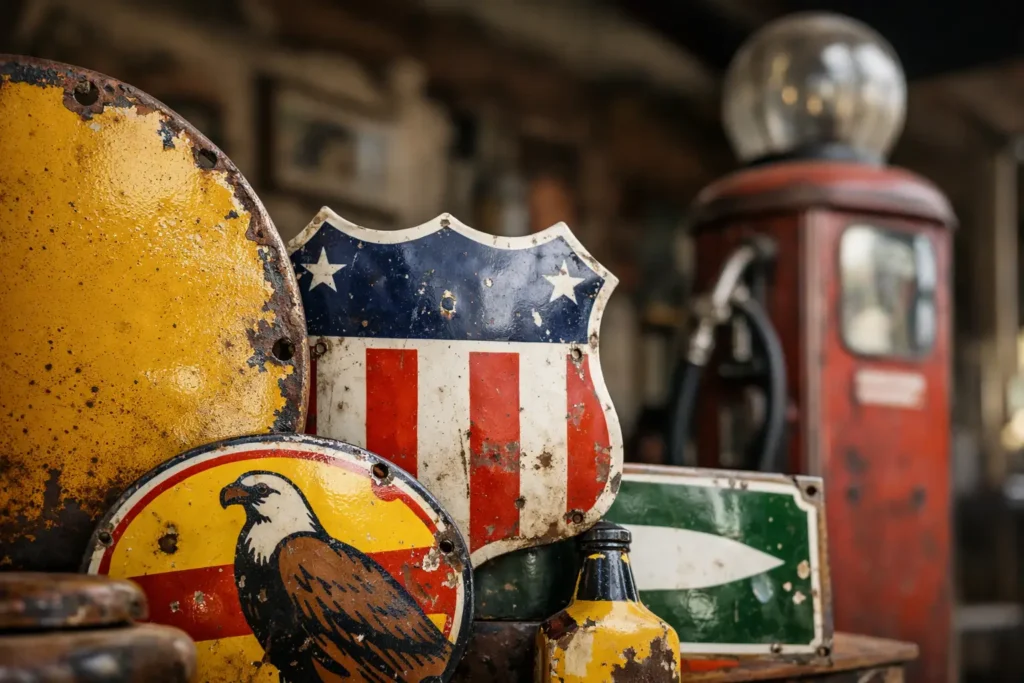
A porcelain sign can look right at ten feet and still be wrong in every way that matters. That is why any serious original porcelain sign review has to start with one hard truth – gloss, color, and good graphics do not make a sign original.
Collectors get burned when they buy with their eyes only. Reproductions can be convincing in photos, fantasy pieces borrow real brand names, and even authentic old signs can be heavily restored or altered. If you are spending real money on gas and oil, soda, automotive, or transport advertising, you need to know what you are actually looking at.
Original porcelain sign review starts with originality
The first question is not whether the sign is pretty. It is whether the piece was company-issued in period. That sounds basic, but it is where most mistakes happen.
An original porcelain sign was made for actual use – a dealership, a gas station, a bottler, a highway business, or a commercial distributor. It belongs to a real advertising history. A reproduction was made later to imitate that history. A fantasy piece is worse because it often combines a real name with a design that never existed in the period at all.
That distinction changes everything. A real two-sided service station sign with edge wear, honest chips, and factory grommets can have serious collector value even with condition issues. A clean fantasy sign with sharp color and no wear may have decorative value only. If you confuse the two, you are not just overpaying. You are buying the wrong category of object.
What to check in an original porcelain sign review
Porcelain signs are steel signs coated with glass enamel and fired at high temperatures. That gives them depth, gloss, and durability that paint usually cannot match. But not all porcelain is equal, and age leaves a pattern.
Start with the steel and the porcelain together, not as separate features. Real age usually shows itself in a relationship between the metal base, the enamel surface, and the exposed areas around mounting holes and edges. Chips should make sense. Rust should develop where moisture would naturally sit. Wear should follow use, handling, mounting, and weather exposure. If the damage looks staged or evenly distributed for effect, that is a red flag.
Look closely at the mounting holes. On original signs, hole wear often tells a better story than the main field. You may see spidering in the porcelain, small loss around the rim, oxidation on the exposed steel, or slight distortion from years of hanging. Freshly drilled holes, overly clean edges, or holes that do not fit the sign’s supposed age and use are worth questioning.
The backside matters too. Many buyers spend all their time on the graphics and ignore the reverse. That is a mistake. The back can show age, oxidation, manufacturer traits, and whether the sign has the right construction for the era. A suspiciously clean back on a sign claimed to be 80 or 100 years old deserves a second look. So does a back that seems artificially aged while the front remains oddly untouched.
Color, gloss, and graphics are useful – but only up to a point
Good porcelain has a certain richness. The surface can show deep gloss, saturated color, and a crisp edge where one color meets another. But reproductions know this too. Modern makers have gotten better at mimicking eye appeal, especially in online photos where scale and surface depth are harder to judge.
That is why graphics alone do not close the case. Fonts need to be right for the maker and period. Layout needs to make sense for known advertising styles. Slogans, logos, and brand marks should match the company’s actual history. A sign can be beautifully made and still be pure fiction.
This is where collector experience really counts. If a design feels off, it usually is. Maybe the spacing is wrong. Maybe the logo belongs to a different decade. Maybe the piece exists in a size that never turns up in original form. After enough years in the hobby, pattern recognition becomes one of the best tools you have.
Condition affects value, but not always the way beginners think
An original porcelain sign review should never treat condition as a simple good-or-bad score. In this market, originality usually beats perfection.
Honest wear is expected. Edge chips, scattered field hits, light fade, moderate rust bleed, and mounting wear can all be acceptable if the sign is real, scarce, and visually strong. In some categories, especially gas and oil, rare regional pieces and hard-to-find dealership signs can bring strong money despite flaws.
On the other hand, over-restored signs can lose collector confidence fast. Touch-up, clear coating, filled chips, repainted sections, and fake aging all affect desirability. Some buyers will still accept restoration for display purposes, especially on large statement pieces. But if the price is based on originality, the work needs to be disclosed plainly.
It depends on the sign and the buyer. A decorator may want color and impact. A collector wants untouched surfaces, correct construction, and as much original material as possible. The best signs satisfy both, but when there is a trade-off, the collecting market usually rewards authenticity first.
Rarity is not just about age
Old does not always mean rare, and rare does not always mean expensive unless demand is there. A common national brand sign in average condition may be easier to sell than a scarcer local piece that few people recognize. At the same time, some regional signs have a loyal following that pushes values well above what outsiders expect.
Size matters too. A small pump plate, a door push, and a large double-sided flange sign all sit in different value lanes even if they carry the same name. Shape matters. So does subject matter. Gas, oil, soda, tire, tractor, farm implement, dealership, and transport collectors all chase different things.
That is why a proper review looks at market position, not just surface condition. Ask how often the sign shows up. Ask whether that exact version is known. Ask whether it has cross-category appeal. A strong Coca-Cola button or a desirable petroliana sign can attract both advanced collectors and high-end interior buyers. That wider demand often supports stronger prices.
Provenance and seller knowledge still matter
You can learn a lot from the object, but the seller matters almost as much. A specialist who has handled original porcelain for decades will usually spot issues that casual sellers miss or ignore. They should be able to discuss age, category, condition, dimensions, and why the sign is believed to be original without hiding behind vague language.
If a seller leans too hard on terms like vintage style, old look, or estate fresh without answering direct authenticity questions, be careful. The same goes for listings that avoid showing mounting holes, edges, backs, and close-ups of damage. Serious buyers need those details.
This is one reason experienced collectors buy from people with a reputation to protect. Road Relics built its business on original stock because in this field, trust is not a bonus feature. It is the whole game. If a seller stands behind authenticity with a real guarantee, that says more than polished wording ever will.
The biggest mistakes buyers make
The first mistake is buying a story instead of a sign. A great tale about a barn find or an old garage does not prove originality. The second is assuming wear equals age. Artificial chips and forced rust fool plenty of people.
The third mistake is chasing cheap examples of expensive signs. If a desirable brand appears at a price far below the market, there is usually a reason. Sometimes it is condition. Sometimes it is a reproduction. Sometimes it is a fantasy piece dressed up as a sleeper.
The last mistake is rushing. Good porcelain survives because people want it, and that same demand creates pressure. When a buyer feels they need to decide instantly, they stop evaluating. Better to miss one sign than own the wrong one for years.
A good original porcelain sign review is really about confidence
At the end of the day, reviewing an original porcelain sign is not about finding a flawless piece. It is about deciding whether the sign is authentic, correctly represented, and priced in line with its condition, scarcity, and appeal. That takes more than a quick look at the front.
The best pieces carry their age honestly. They show factory craftsmanship, period-correct design, believable wear, and the kind of surface that only time can build. When all of that lines up, you do not just have wall decor. You have a piece of commercial American history worth owning.
If you are serious about buying original porcelain, slow down, study the details, and let the sign prove itself before your money does.