
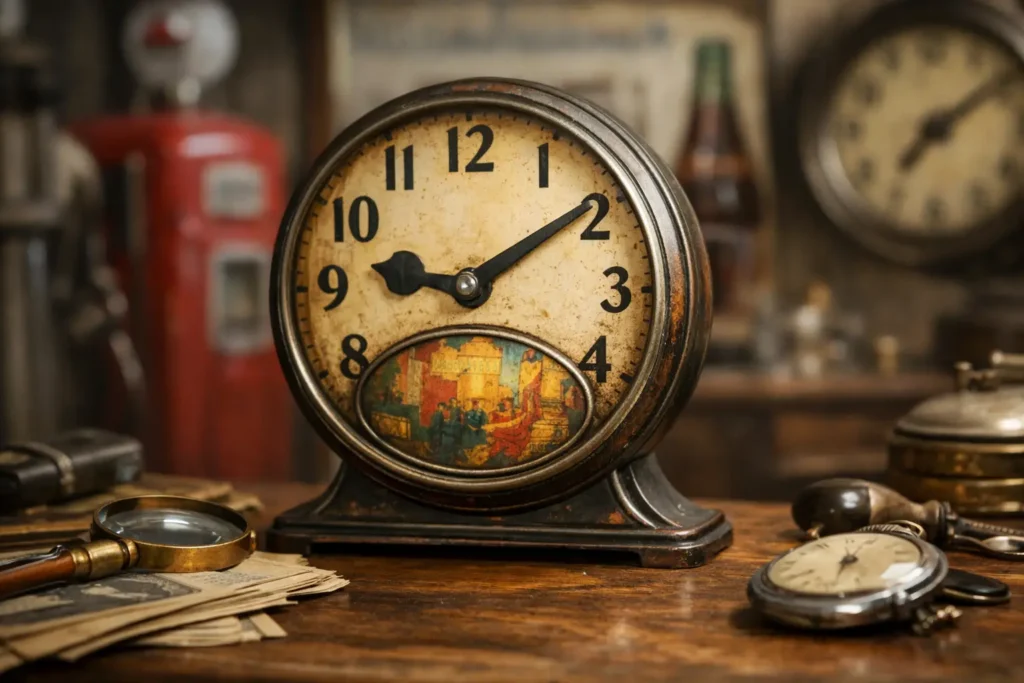
A Coca-Cola button clock with honest age and the right face can bring strong money. The same clock with a repainted dial, swapped hands, or a modern cord can drop fast. That is the real starting point for how to value antique advertising clocks – not just the brand name, but what is original, what has been changed, and what serious collectors will actually pay for.
Advertising clocks sit in a category that catches both collectors and decorators, which is part of what makes pricing them tricky. A clock can have strong visual appeal and still fall short as a collector piece if the case, dial, movement, or advertising panel has been altered. On the other hand, a scarce company-issued clock with wear, scratches, and age can still be a premium piece if it is authentic and complete.
How to value antique advertising clocks starts with originality
If you want a real number, originality comes first. In this category, one changed part can mean the difference between an investment-grade piece and a nice display item. Original finish, original dial, original advertising glass or insert, original hands, original can, and original movement all matter.
That does not mean every untouched clock is automatically top shelf. It means originality is the baseline. Once that is established, you can start weighing rarity, condition, and brand demand. If originality is in doubt, the value drops into a different lane right away.
Collectors who have been around these clocks for years know the weak spots. Dials get repainted. Cords get replaced. Backs go missing. Movements get swapped. Cases are polished too hard or repainted to look clean. Glass can be replaced with later pieces. The trouble is that some of these repairs were done decades ago, and they can fool buyers who are only looking at the logo on the front.
An original clock with wear is usually worth more than a dressed-up clock that looks fresh. Honest age is not the enemy. Fake freshness is.
Brand, subject, and scarcity move the market
Not all advertising clocks live in the same price range. Brand matters because demand matters. Coca-Cola, gas and oil, automotive, soda, tobacco, farm, and transportation pieces tend to have strong followings, but even inside those categories there is a wide spread.
A common clock from a popular brand can still be easier to find than a lesser-known regional piece with true scarcity. That is where experience counts. Some clocks bring money because the company name is famous. Others bring money because they hardly ever show up in original condition.
Regional distribution matters too. A local bottler, service station, tire dealer, or farm supply company may not mean much to the average buyer, but to the right collector it can be a hard-to-find target piece. Company-issued examples with unusual graphics, dealership names, or small-run advertising often outperform more generic examples.
When judging rarity, ask a simple question: is this scarce, or does it just seem scarce because I have not seen many? There is a difference. A seasoned dealer can usually tell whether a clock is genuinely uncommon or just not often brought to market.
The maker matters almost as much as the advertiser
Sessions, Telechron, Pam, Gilbert, New Haven, and other known clock makers each have their own following. Some collectors chase the advertiser first. Others pay close attention to the maker, case style, movement type, and production era.
Pam clocks are a prime example. Many are widely collected, but value depends heavily on the exact model, size, graphics, lighted versus non-lighted design, and whether the body and ad panel are right. Telechron clocks also bring solid money when the face, rotor, and case are correct. A good advertising name on a desirable maker is a strong combination.
Condition is not just about how clean it looks
Condition in antique advertising is a collector issue, not a furniture issue. A polished-up clock can look great on a wall and still be worth less than a dirtier example with stronger originality. That is why condition has to be judged in layers.
Start with the dial or advertising panel. Is the print crisp and period-correct, or soft and repainted? Check the case for repaint, overcleaning, rust repair, cracks, or replacement parts. Look at the bezel, glass, back, and mounting points. Study the hands. Original hands that match the model matter more than many buyers realize.
Then move to the mechanical side. Does the movement run? Has it been serviced? Is the movement the right one for the clock? A running clock is better than a dead one, but not if the movement is a later replacement. Originality still outranks convenience.
Patina should make sense. Wear should match age, use, and the way the clock was built. If the face looks brand new but the case is heavily worn, or the case looks perfect while the back hardware is tired and old, something needs a closer look.
Working versus non-working
Collectors usually prefer clocks that run, but the premium for a working clock depends on the piece. On a rare, highly original clock, running condition is secondary to authenticity. On a more common example, a working movement can make the clock easier to sell.
Electrical pieces add another layer. Old wiring, sockets, and plugs may not be safe by modern standards. Rewiring may help display use, but it can also affect collector value if done carelessly or without preserving what was there. In some cases, professional work is acceptable. In others, it becomes another subtraction from originality.
Provenance and completeness can separate the better pieces
If a clock comes out of a long-held collection, an old store, or directly from a family tied to the business, that helps. Provenance does not fix a bad piece, but it can strengthen a good one. It gives context, and context matters in a market full of parts pieces and put-togethers.
Completeness matters too. Original backs, correct inner components, factory tags, and untouched mounting hardware can all support value. These are the details advanced buyers notice first. Missing parts are not always deal breakers, but they narrow the buying pool and usually put pressure on price.
How to value antique advertising clocks by comparing real sales
Asking prices are not the market. They are just wishes until money changes hands. If you want to know how to value antique advertising clocks accurately, compare documented sales of similar original examples, not the highest online listing you can find.
The key word is similar. Same brand is not enough. You need the same maker, same size, same style, same era, and a close match in originality and condition. One-inch difference in diameter may not matter much on a common clock, but a different case style or a replaced dial absolutely does.
Auction results can help, but they need context. A weak photo, poor cataloging, or the wrong audience can drag a hammer price down. On the other side, two bidders who need the same clock can push one well beyond normal range. Private sales through knowledgeable dealers often give a cleaner picture of where the market really is because the clock has been vetted, described properly, and offered to people who know what they are looking at.
This is one reason collectors work with specialists. In a category where originality is everything, accurate value comes from comparison plus experience. Road Relics built its reputation on original stock because the difference between original and reproduction is where real value lives.
Red flags that should lower value fast
Some issues should stop you in your tracks. Repainted dials, fantasy advertising, incorrect glass, wrong hands, swapped movements, fake aging, and mismatched parts all cut value, sometimes severely. A rare name does not rescue a bad clock.
Be especially careful with clocks that feel too good for the price or too perfect for the age. Many reproductions and altered examples are made to satisfy wall-decor demand, not collector standards. They may still have decorative value, but they do not belong in the same pricing conversation as original company-issued pieces.
The market is strongest where authenticity is strongest
At the top end of this hobby, buyers are paying for originality, rarity, and confidence. They are not paying just for color and nostalgia. That is why the best clocks are not always the prettiest ones. They are the ones that hold up under scrutiny.
If you are buying, slow down and study the piece. If you are selling, be honest about what is original and what is not. Antique advertising clocks reward the informed eye, and that is part of their appeal. The closer you get to the real thing, the closer you get to the real value.