
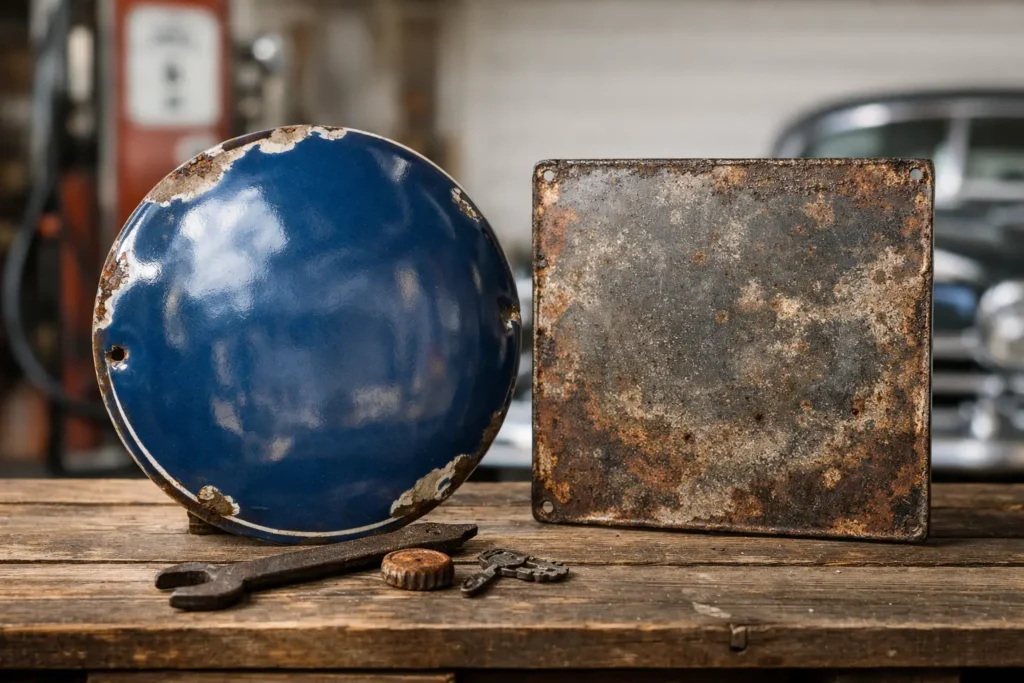
A lot of buyers think porcelain and tin are just two versions of the same old advertising sign. They are not. In the real world of porcelain signs vs tin signs, the difference shows up in weight, surface, durability, value, and how the piece was meant to work out on the road, on a building, or in a dealership display.
If you collect original gas and oil, soda, automotive, farm, or roadside advertising, this distinction matters. It affects price, condition expectations, how a sign ages, and how easily a reproduction can fool an inexperienced buyer. Some collectors strongly prefer porcelain. Others love the graphics and paper-thin history of tin. Both have a place, but they are not interchangeable.
Porcelain signs vs tin signs: the basic difference
Porcelain signs are steel signs coated with layers of glass enamel and fired at high heat. That finish is what gives authentic porcelain its hard, glossy surface and rich color. On better examples, especially early gas, oil, and automotive pieces, you can see real depth in the finish. The sign feels substantial in hand, and even with honest wear it usually carries a presence that reproductions struggle to match.
Tin signs are a different animal. In the antique advertising world, “tin” often refers to thin metal signs with painted or lithographed graphics. They were made to advertise, not to last forever. Many were used indoors, though plenty saw hard service in stores, workshops, and commercial spaces. Tin can be beautiful, graphic, and highly collectible, but it is generally lighter, thinner, and more vulnerable to bends, scratches, and moisture damage than porcelain.
That basic construction difference is the whole story. Porcelain was built for weather, durability, and visibility. Tin was often built for cost, color, and fast distribution.
Why porcelain usually commands more money
Collectors do not pay more for porcelain just because it is shiny. They pay more because original porcelain signs were expensive to produce, built to survive, and often tied to major brands with strong collector demand. Gas station signs, motor oil signs, dealership signs, and transportation pieces in porcelain tend to carry weight in the market for good reason.
A strong porcelain sign can take edge wear, surface hits, and even some rust at the mounting holes and still hold serious value. The colors remain bold. The gloss survives. The sign still reads from across the room. That kind of durability matters when you are buying a 70 to 100-year-old advertising piece.
Tin signs can also bring strong money, especially rare examples with outstanding graphics, low survival rates, or important brand history. But as a category, tin is usually more condition-sensitive. One bad crease, one area of paint loss, or one poorly cleaned surface can change the whole look. With porcelain, wear is often part of the appeal. With tin, damage can take over the piece.
That does not mean porcelain always wins. A rare lithographed tin sign with great imagery can outrun an average porcelain piece all day long. Rarity, brand, subject matter, and eye appeal still rule.
Condition means something different on each
This is where newer buyers get tripped up. They look at a porcelain sign with chips and say it is rough. Then they look at a tin sign with waviness, touch-up, and fading and call it excellent because the image is still there. That is not how experienced collectors read condition.
On porcelain, the usual trouble spots are the outer edge, mounting holes, random chips in the field, and backside rust. Most original examples will show some of this. The question is whether the damage is honest and whether the color, gloss, and overall presentation still work. A sign with strong gloss and scattered chips is often far more desirable than a dead-looking sign with suspiciously little wear.
On tin, you watch for bends, extra holes, kinks, edge splits, oxidation, touch-up, and surface fade. Because the material is thinner, even minor handling can leave a permanent mark. Flattening and restoration can help appearance, but they can also hurt originality if done poorly or too aggressively.
With either type, untouched surface matters. Originality in condition often counts more than cosmetic improvement.
Porcelain signs vs tin signs for display
If the goal is impact on a wall, porcelain usually has the edge. It reflects light well, carries real depth, and reads as substantial even from a distance. In a garage, showroom, bar, shop, or automotive collection, a good porcelain sign has authority. It does not just decorate a space. It anchors it.
Tin signs can be more graphic and more varied in design. Lithography allowed strong illustration, decorative borders, mascots, product scenes, and typography that collectors love. In some interiors, especially where you want a softer, flatter, more paper-like visual feel, tin can actually present better than porcelain.
It depends on the room and the piece. If you are after bold Americana with strong presence, porcelain is hard to beat. If you want detailed graphics and period charm, tin may be the better choice.
Which is older is not always the right question
Buyers often assume tin is older or porcelain is more premium simply because of material. That is too broad. Both categories were produced across long periods, and both include early and later examples. You have to judge the sign by the company, era, maker, construction, and known originals in the market.
Some of the best early advertising signs were tin. Some of the most iconic roadside signs were porcelain. The material alone does not date the piece. It is only one clue.
The smarter question is whether the sign makes sense for the brand and period. Does the construction match what that company actually issued? Does the size make sense? Are the colors right? Is the slogan documented? Those questions matter more than whether a seller calls it porcelain or tin.
Authenticity is where experience counts
Porcelain reproductions have fooled plenty of people because they can look convincing in photos. The colors can be close, the distress can be staged, and the back can be artificially aged. But original porcelain has tells – the right weight, the right gloss, the right edge wear, the right pattern of chipping, and the right construction for the era.
Tin is no safer. Reproduction tin signs have flooded the market for years, and many are sold openly as decor. The problem starts when they age a little, get passed around, and suddenly become “old.” Then you get fantasy pieces, made-up brand combinations, and signs that were never company-issued in the first place.
That is why serious buyers stick with original examples from sellers who know the field. At Road Relics, that is the whole point. If you are spending real money on antique advertising, authenticity is not a bonus feature. It is the deal.
What collectors usually choose first
If someone is building a higher-end gas and oil or automotive advertising collection, porcelain is often the first target. The category has broad demand, great durability, and strong crossover appeal with decorators and car collectors. Original porcelain also tends to hold attention over time. A good piece still looks good ten years later, even after you have seen a lot of signs.
Tin often appeals to buyers who love graphics, scarcity, and variety. There is a lot of personality in antique tin. General store signs, product displays, tobacco, soda, farm advertising, and counter pieces can offer terrific artwork and real history without always reaching top porcelain prices.
That said, advanced collections usually include both. Most seasoned collectors do not treat this as an either-or question forever. They buy the best originals they can find in either material.
So which should you buy?
Buy porcelain if you want durability, strong wall presence, and a category with proven collector demand. Buy tin if you care more about graphics, unusual subjects, and the charm that comes with a lighter, more vulnerable survivor.
If investment matters, buy rarity and originality before material. If display matters, buy what stops you in your tracks when you walk into the room. And if you are choosing between an average porcelain sign and a great tin sign, take the better sign every time.
The right piece is the one that still looks honest after the excitement of the purchase wears off.