
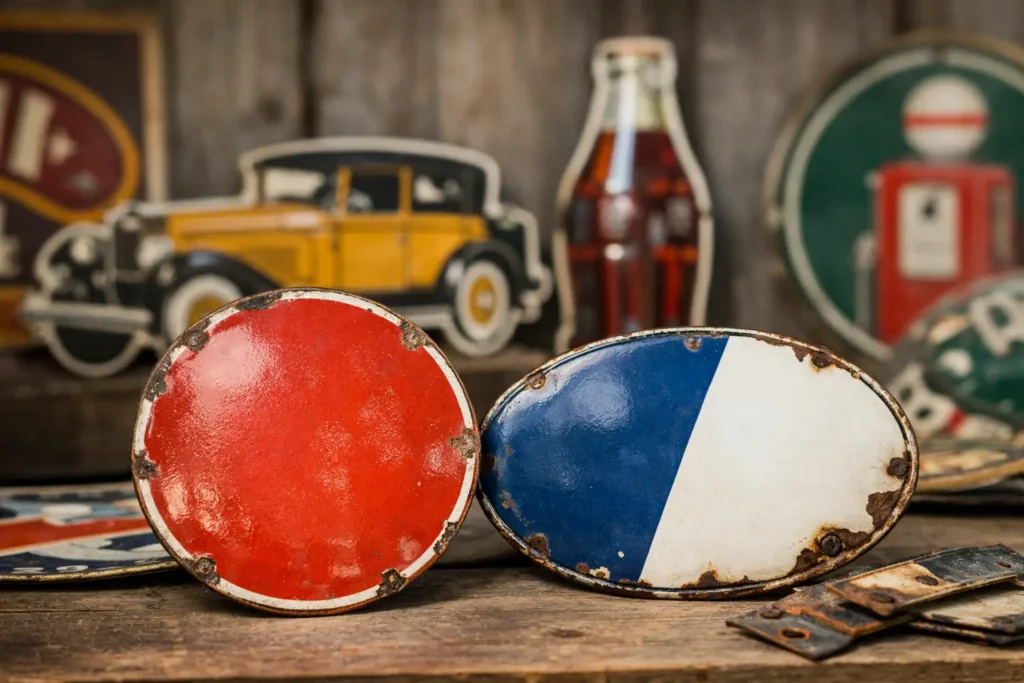
A beat-up gas station sign can bring more money than a cleaner, prettier wall piece from the same era, and that surprises a lot of people. So, are porcelain signs valuable? Yes – the right ones absolutely are. But value in this market is never just about age or looks. It comes down to originality, rarity, subject matter, condition, size, color, and whether serious collectors believe the piece is the real thing.
That last part matters more than anything else. In the porcelain sign market, one original company-issued sign with honest wear will usually outclass a sharp-looking reproduction every time. Collectors are not paying for a decorative image. They are paying for history, scarcity, and the fact that the sign survived.
Are porcelain signs valuable in today’s collector market?
They are, and the best examples have been valuable for a long time. Original porcelain advertising signs sit in a category that pulls in multiple buyers at once. You have dedicated sign collectors, gas and oil collectors, automobile memorabilia buyers, Americana collectors, and interior designers all competing for the same limited pool of originals. That kind of crossover demand is a big reason strong signs stay strong.
Porcelain signs also have a visual impact that tin and cardboard often cannot match. The fired enamel finish gives them depth, gloss, and color that still reads from across a room. Put an original double-sided gas, oil, soda, or dealership sign on a wall, and it does more than decorate a space. It becomes the piece people notice first.
Still, not every porcelain sign is a high-dollar sign. Some are common. Some have too much damage. Some are desirable but not rare. And some are fantasy pieces or reproductions passed off as old. That is why broad statements about value only go so far.
What actually makes porcelain signs valuable?
The first driver is rarity. If a sign was made in small numbers, used hard in the field, and few examples survived, the market will usually reflect that. Regional petroleum brands, obscure dealership signs, early transportation advertising, and unusual shapes often carry stronger value because collectors know they are not easy to replace.
The second driver is originality. This is where experienced buyers separate themselves from casual buyers. A sign can have edge wear, chips, and fading and still be highly desirable if it is unquestionably original. On the other hand, a bright sign with suspicious gloss, questionable grommets, or artificial distress can lose most of its appeal the moment authenticity comes into doubt.
Condition matters, but it is not simple. In this hobby, condition has to be judged in context. A rare sign with honest field wear may be worth far more than a common sign in cleaner condition. Collectors will tolerate chips, staining, touch wear, and mounting damage if the piece is scarce enough. They will not be nearly as forgiving if the sign is common and replaceable.
Color and graphics matter too. Strong graphics, bold brand names, and memorable imagery help a sign stand out. Good colors, especially deep reds, cobalt blues, rich greens, and strong yellows, tend to present well. Signs with animals, logos, mascots, automobiles, or exceptional typography usually attract more attention than plain text pieces.
Size is another factor. Large signs can bring serious money because they display so well, but only if the subject matter is there. Bigger is not always better. A smaller, scarcer sign from a sought-after brand can outperform a large but ordinary example.
The brands and categories that usually bring stronger prices
Gas and oil remains one of the strongest areas of the market. Original signs from brands like Sinclair, Texaco, Shell, Mobil, Gulf, and other desirable petroleum names continue to attract collectors because they sit at the center of American roadside history. Early service station signs, pump plates, dealer signs, and double-sided porcelain pieces tend to be especially desirable.
Automotive and dealership porcelain is another serious category. Original dealer signs tied to major car brands or defunct regional dealerships can be very hard to find. The same goes for transportation pieces tied to buses, trucks, tires, and related service industries.
Soda and food advertising has its own buyer base, with Coca-Cola leading much of that demand. That said, not every Coca-Cola porcelain sign is rare, and popularity alone does not guarantee top value. The market always comes back to originality, scarcity, and eye appeal.
Then there are the sleepers – smaller regional companies, farm supply brands, industrial advertising, and obscure trade signs. Those can surprise people. A brand with a limited geographic footprint may not mean much to the general public, but to a serious collector, it can be the missing piece they have been hunting for years.
Condition: when damage hurts and when it doesn’t
Porcelain signs were made for use, not for preservation. They hung outdoors in sun, rain, wind, grease, and road grime. So most originals show some level of wear. That is normal.
What hurts value most is major porcelain loss in critical areas, heavy fading, severe rust bleed, extra holes, bends, or restoration that is poorly done or not disclosed. Damage across the main graphic or brand name is usually more serious than edge wear. A few chips around the perimeter may be acceptable. A large hit through the center logo is another story.
But this is where newer buyers often misread the market. They assume cleaner always means more valuable. Not necessarily. A scarce sign with solid gloss, good color, and honest edge chips can be far more desirable than a polished-up piece with questionable restoration. Original surface wins a lot of arguments in this hobby.
Why reproductions muddy the waters
A big reason people ask are porcelain signs valuable is because they see a wide range of prices online and assume the market is inconsistent. Part of that confusion comes from reproductions. There are plenty of newer porcelain-style signs made strictly for decoration. Some are openly sold as reproductions. Others are not described so clearly.
A reproduction can look good on a wall, but it does not belong in the same conversation as an original company-issued sign. Collectors know the difference, and prices reflect it. The trouble starts when inexperienced buyers pay original money for something that was made to imitate age.
That is why seller knowledge matters. If a dealer cannot speak plainly about period, manufacture, wear patterns, mounting points, known repro issues, and why the sign is believed to be original, that should give you pause. In a market where authenticity drives value, confidence has to be backed by experience.
Are porcelain signs a good investment?
Sometimes, yes. Sometimes, no. If you buy strong original material at the right level, rare porcelain signs have shown staying power over decades. They have a real collector base, they display well, and truly scarce examples do not suddenly become easier to find. That supports long-term demand.
But this is not a market where every old sign goes up forever. Taste shifts. Some categories cool off. Common examples can flatten. Overpaying for mediocre material is still overpaying. And if you buy a reproduction by mistake, any investment argument goes out the window.
The better approach is to buy quality. Buy originality. Buy the best example you can afford within the category you actually like. If the sign has rarity, strong presentation, and honest condition, you usually give yourself a better chance than if you chase bargains that look too good to be true.
How to tell if your porcelain sign has real value
Start with the basic questions. Is it original? Is the brand desirable? How rare is that exact version? What does the condition look like in the field of other known examples? Is it single-sided or double-sided? Does it have strong color and gloss? Has it been restored, and if so, how much?
Then compare it to actual collector-grade material, not random asking prices. Anybody can list a sign at a fantasy number. That does not mean the market agrees. Real value comes from what knowledgeable buyers are willing to pay for authentic examples.
If you are unsure, get an opinion from someone who handles original signs regularly. A specialist who has bought, sold, and lived with authentic porcelain for years can often spot problems quickly and just as quickly recognize the signs that deserve serious attention. At Road Relics, that collector-first mindset is the whole point.
The best porcelain signs are valuable because they are not making any more of them, and the good originals still stop people in their tracks. If you buy with your eyes open and keep authenticity at the center, you are far more likely to end up with a piece that holds both its story and its worth.