
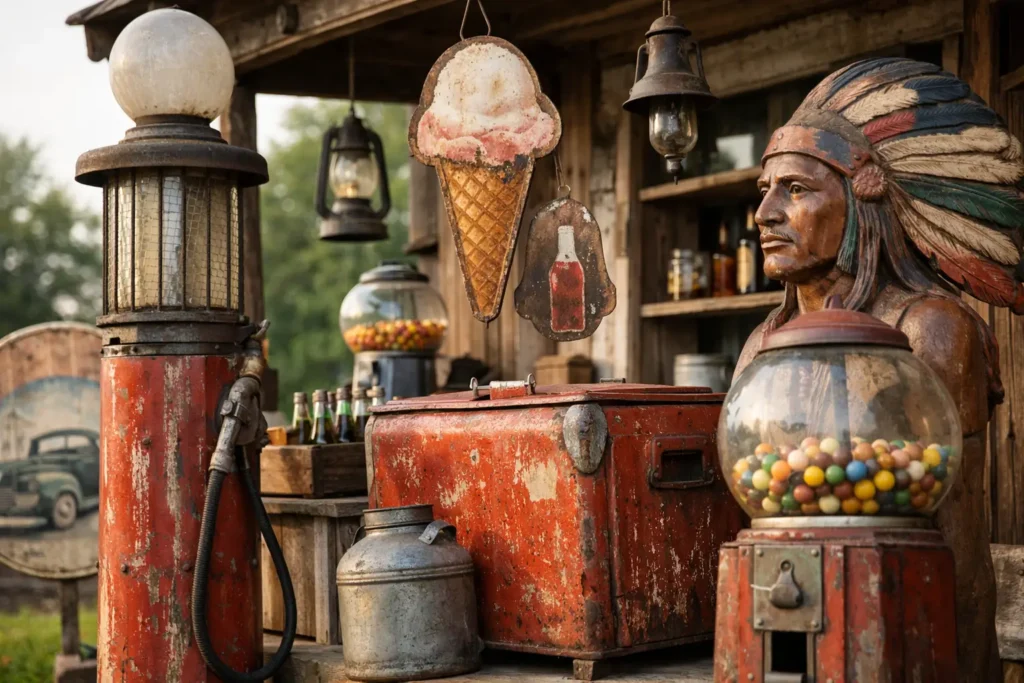
A real country store sign does not need much introduction. Hang an original flour, tobacco, soda, feed, or farm supply piece on the wall, and the room changes fast. That is the pull behind country store advertising antiques – they are not just decoration, and they are not all created equal.
Collectors know the difference the minute they step up to a piece. The right sign has age that makes sense, color that still holds, wear that matches its life, and graphics tied to a real company and a real era. The wrong one might look old from across the room, but up close it falls apart. In this part of the market, originality is everything.
What country store advertising antiques really are
The term gets used loosely, which causes plenty of confusion. True country store advertising antiques usually refer to original signs, displays, clocks, tins, thermometers, product containers, and branded fixtures that would have lived inside or outside a general store, feed store, hardware store, drug store, or roadside mercantile. Think coffee, crackers, motor oil, tobacco, patent medicine, seed corn, livestock feed, farm equipment, and soft drink brands that built rural retail in America.
Some pieces were made to be nailed to an exterior wall. Others sat behind the counter, hung from the ceiling, or worked as point-of-sale displays. A small die-cut tobacco sign and a large porcelain farm implement sign can both fit the category, but they appeal to buyers for different reasons. One may be about graphic charm and shelf presence. The other may be about rarity, size, and serious collector demand.
That is why broad labels do not help much. If you are buying in this category, you need to know exactly what the object was made to do and where it would have lived.
Why country store advertising antiques still draw serious buyers
There is nostalgia here, of course, but nostalgia alone does not support strong prices. The better pieces carry three kinds of value at once. First, they are graphic objects with strong display power. Second, they are pieces of American business history. Third, the best originals have scarcity that reproductions can never match.
A feed sign with bold typography, a soda clock with untouched color, or a hardware store tin with honest wear can anchor a room in a way modern decor usually cannot. Interior designers and shop owners respond to that immediately. Collectors go a step further. They look at maker marks, construction, regional distribution, and whether the subject matter fits a known period of use.
Condition matters, but so does survival rate. A piece that was used hard in a rural store and tossed when the brand changed may be far harder to find than a cleaner example from a more common line. So yes, better condition generally brings stronger money, but rarity and desirability often outrank perfection.
Originality is where the market gets sorted out
This is the part many buyers learn the hard way. Country store advertising antiques have been copied for years. Some reproductions are obvious. Some are meant to fool people. A few are built from old parts, repainted surfaces, or fantasy brand combinations that never existed in period.
An original piece usually has a look that is difficult to fake convincingly. Porcelain should show the right gloss, edge wear, and spidering if present, not fresh distressing done with a grinder and a plan. Tin signs should age in a way that matches their metal, paint, and mounting holes. Cardboard displays should show proper printing methods, not modern ink patterns pretending to be old. Even the smell of old paper or wood can tell you something when you have handled enough of it.
The trouble is that one clue is never enough. Buyers get in trouble when they rely on a single feature. They see rust and assume age. They see fading and assume authenticity. But forced wear is common, and bad restorations can cloud the picture. You need the whole piece to make sense – construction, graphics, materials, company history, and wear pattern all working together.
The forms that tend to matter most
Not every category inside country store advertising antiques performs the same way. Porcelain signs remain strong because they combine durability, color, and visual punch. Original neon has a different kind of appeal, especially when the glass, housing, and transformer setup fit the period and the sign still presents honestly. Tin signs are a deep field on their own, from farm and seed advertising to tobacco and beverage pieces.
Advertising clocks are another category where buyers need to slow down. Original faces, movements, hands, housings, and cords do not always stay together over decades. A clock can look right at first glance and still have changed parts. Trade signs and folk art signage also deserve attention because they often carry one-off character that factory-made pieces cannot touch.
The best category depends on your goal. If you want a statement piece for a showroom or bar, scale and color may lead the decision. If you are building a serious collection, rarity, brand importance, and originality usually come first.
How to judge country store advertising antiques without fooling yourself
The first question is simple: was this piece made by the company, for the company, in the period it claims to represent? If the answer is unclear, keep digging. Company-issued signs and displays have a different level of legitimacy than later decorative pieces made to cash in on nostalgia.
After that, study the condition honestly. Honest wear is not the enemy. In fact, untouched surfaces often carry more credibility than pieces cleaned up too aggressively. Still, there is a line. Heavy damage, replaced sections, overpainting, or rebuilt neon can affect both value and appeal. Restoration is not always a deal breaker, but it should be disclosed clearly and reflected in price.
Size, subject, and brand matter too. A common general store item with great graphics can outsell a scarcer but dull piece. A desirable gas and oil crossover sign found in a country store context may attract more buyers than a regional grocery item with limited recognition. This is where experience counts. The market is not perfectly logical, but it does have patterns.
Why provenance and seller knowledge matter
A knowledgeable seller does more than quote a date range. They can usually explain why a piece is right, what category it belongs in, how often it turns up, and what condition issues matter most. That level of confidence tends to come from handling originals over many years, not from reading a few listings.
Provenance can help, though it is not always available. Old collection tags, photographs, known auction history, or direct purchase from long-held estates can all add comfort. But paperwork alone should not carry the deal. The object still has to stand on its own.
That is one reason experienced buyers prefer specialists. When a seller focuses on original advertising and Americana, the conversation gets better fast. You are more likely to get straight answers about touch-up, replacement parts, gloss, damage, and whether a piece has been in the hobby for decades or surfaced recently. That trust matters, especially on higher-end material. At Road Relics, the standard is simple – original means original, not reproduction, replica, or fantasy piece.
Buying for display versus buying for the long haul
There is nothing wrong with buying a country store piece because it looks great in a room. Plenty of strong collections started that way. But buyers should be clear about their lane. If your goal is design impact, you may accept moderate wear, a less famous brand, or a piece with surface issues that do not hurt presentation from six feet away.
If your goal is collector-grade material, the bar moves higher. You will care more about untouched surfaces, scarce variants, regional importance, and whether the piece sits near the top of its category. Price follows that difference. Two signs can have similar subject matter and completely different market strength based on originality and desirability.
That trade-off is where many smart purchases are made. Sometimes the best buy is not the cleanest example. It is the honest one with the right look, strong graphics, and no bad surprises.
The mistake that costs buyers the most
The costliest mistake is rushing because the piece feels old enough. That is how people end up with over-restored signs, modern copies, or assembled examples that will always be second-tier. Country store advertising antiques reward patience. The more original examples you study, the harder it becomes for bad material to fool you.
It also helps to ask better questions. Has it been touched up? Are the holes original? Is the frame correct to the piece? Does the back tell the same story as the front? Is the company and slogan period-correct together? Serious material usually survives serious questions.
That is the beauty of the category. When you find the right piece, it carries its age honestly. It does not need a sales pitch. It just needs a wall, good light, and a buyer who knows why the real thing still matters.