
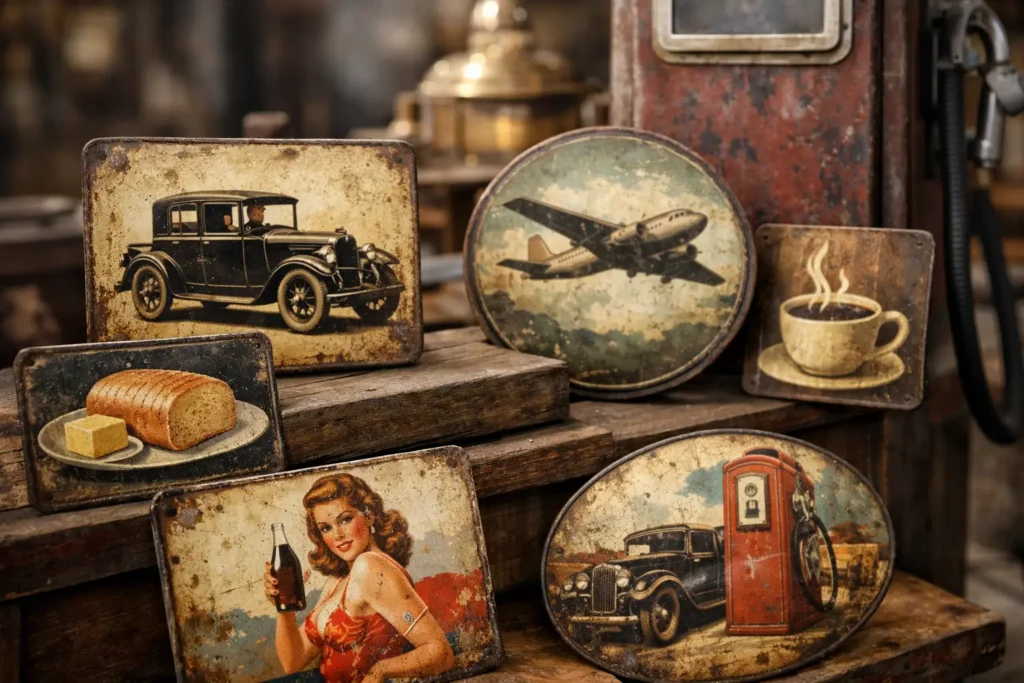
A true rare antique tin sign does not need help from hype. You can usually feel it the moment you see the right one – honest age, strong graphics, period construction, and the kind of wear that took decades to earn. The problem is that the market is crowded with cleaned-up stories, modern copies, and pieces described as rare simply because they are old. Serious buyers know better. Rarity means more than age, and value comes from a mix of originality, condition, subject matter, and how often a sign actually changes hands.
What makes rare antique tin signs truly rare
Not every old tin sign belongs in the top tier. Some were produced in large numbers, distributed widely, and survive today in decent volume. Others were regional, short-lived, or tied to a company that disappeared early. That is where rarity starts to matter.
A sign can be rare because very few were made, but it can also be rare because almost none survived. Tin was often used hard in garages, feed stores, hardware counters, bottling plants, and general stores. It bent, rusted, got nailed up outdoors, and was thrown out when branding changed. A surviving example from a small oil jobber, local soda bottler, farm supply company, or dealership can be much tougher than a more famous national brand sign that was saved in greater numbers.
Size matters too. Small countertop pieces and door push signs sometimes survive because they were easier to store. Large embossed tin signs, self-framed examples, and die-cut advertising pieces had a harder road. They were more exposed, more likely to be damaged, and more difficult to keep. When a large-format sign turns up with strong color and no serious restoration, collectors notice.
Why subject matter drives demand
Some categories simply bring stronger money and deeper interest. Gas and oil remains one of the most competitive parts of the market because it combines bold graphics, recognizable brands, and Americana appeal. Automotive signs, motorcycle advertising, soda pieces, tobacco, agricultural brands, and transport-related advertising all have active followings.
That said, demand is not always about the biggest household name. A lesser-known regional sign can outperform a common national example if the graphics are right and the survival rate is low. A great dog food sign with memorable artwork, a sharp dealership panel, or an unusual transport tin can attract both collectors and decorators. It depends on who is in the room and how many chances they have had to buy that piece before.
Graphics do a lot of the work. Color, typography, mascot imagery, and period design can push a sign far beyond its basic category. Early lithographed tin with strong reds, deep blues, and crisp lettering tends to hold attention. If the sign has movement, a great figure, or a memorable brand mark, it becomes easier to justify paying up.
Originality is the whole game
With rare antique tin signs, originality is not a detail. It is the whole game. A scarce sign with repaint, fantasy touch-up, or heavy restoration can still have decorative value, but it is no longer playing in the same league as a clean original surface.
This is where newer buyers get hurt. They see shine and assume quality. In reality, too much shine can be a warning. Overcleaning can strip away the honest surface that collectors want to see. Repaint can flatten the image, hide corrosion, and create a false sense of condition. Artificial distressing is another problem. Some reproductions are made to look old, but the wear pattern does not make sense when you know what genuine age looks like.
Original mounting holes, correct edge wear, appropriate oxidation, period stamping, and consistent paint loss all tell a story. So does the back of the sign. The reverse is often where the truth lives. Fresh paint, suspiciously uniform rust, or modern hardware can raise hard questions fast.
Collectors who have handled originals for years usually trust their eye first, then confirm with construction details. If a sign feels wrong, it usually is. That instinct is earned over time, but it comes from studying real pieces, not photos of reproductions.
Condition matters, but not in a simple way
Every buyer says condition matters. The real question is which condition issues matter most for that specific sign. A rare sign with edge chipping, mild bends, and general age wear can still be a great piece if the main graphic field is strong. On the other hand, heavy rust through the center image, significant repaint, or major metal loss can limit both value and long-term appeal.
There is always a trade-off. If a sign is truly scarce, collectors will forgive problems they would never accept on a more common example. That is normal. You may only get one real shot at a sign that has not surfaced in years. Waiting for a perfect one can mean waiting forever.
Still, not all damage is equal. A clean, untouched sign with honest wear usually beats a slicker piece that has been repaired. The market has become more educated on this point. Good original condition, even with flaws, is often more desirable than restored condition that looks too neat for its age.
How to spot better buying opportunities
The best buying opportunities usually sit where rarity, originality, and visual impact meet. That does not always mean the most expensive sign in the room. Sometimes it means finding a piece from a category that is underappreciated, or buying a regional sign before the wider market catches up to it.
Look for signs with clear provenance, old collection history, or pieces that have been off the market for decades. Fresh-to-market examples often carry more excitement because they have not been repeatedly offered and picked over. Long-term collection pieces also tend to be better, simply because advanced collectors usually held onto stronger material.
Pay attention to construction. Embossed tin, self-framed edges, and early litho printing can separate better signs from later, more ordinary production. Dimensions matter as well. A harder-to-find size, especially in a desirable subject, can push a piece into another level.
It also helps to buy what still looks good from across the room. Collectors care about details, but display value matters. A sign that stops people at twenty feet usually keeps earning attention once it is on the wall.
Where buyers go wrong
Most mistakes come from rushing past authenticity questions. Buyers fall for the brand name and stop looking at the object itself. They assume age from surface dirt. They trust seller language that says old, vintage, or from an estate without asking whether the sign is original company-issued stock.
Another common mistake is confusing scarcity with value. A sign can be hard to find because nobody wanted to save it, and it can still be a weak piece. Rarity alone is not enough. The sign needs collector interest, visual appeal, or historical significance. The best examples usually have all three.
The last mistake is buying on photos alone when the seller cannot answer basic questions. If someone cannot discuss dimensions, construction, mounting, condition issues, and why the sign is believed to be original, that should tell you something. Specialist knowledge matters in this category because the details are where fakes fall apart.
Why trust matters with rare antique tin signs
This part of the market is built on reputation. Anyone can repeat a brand name and call a sign old. Not everyone can stand behind originality with confidence. That is why experienced collectors buy from people who know the material, have handled major collections, and are willing to be direct about condition, repairs, and authenticity.
At Road Relics, that standard is simple – original means original. No reproductions, no replicas, no fantasy pieces passed off as period stock. For serious buyers, that kind of clarity matters more than polished sales talk because it protects both the collection and the money behind it.
Rare antique tin signs still earn strong attention because they do two jobs at once. They are historical objects, and they are powerful display pieces. The right one carries real age, real scarcity, and real presence. If you buy with a trained eye and a hard line on originality, you will enjoy the hunt a lot more – and you will end up with pieces worth living with for a long time.