
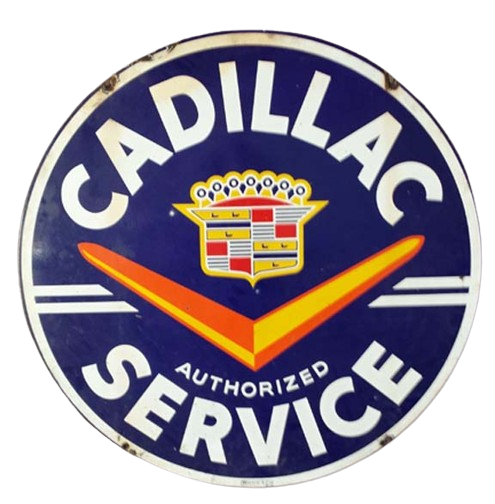
Real vintage signs usually tells on itself within the first minute. The steel feels right, the gloss has depth, the edge wear makes sense, and the whole piece carries age in a way a fresh-made fake rarely can. If you want to learn how to identify porcelain signs, you need to stop looking for one magic test and start reading the sign as a complete object.
That matters because the vintage signs market is full of pieces that look good from ten feet away. Reproductions have gotten better. Fantasy signs are cleaner than they should be. Some are even artificially aged just enough to fool a buyer who only checks for chips and rust. The good news is that original porcelain has a look and feel that is hard to fake when you know what to examine.
How to identify porcelain signs without guessing
Porcelain signs were made by fusing powdered glass onto a steel base at high heat. That process produced a hard, glossy surface with real depth and durability. It was used on gas and oil signs, automobile advertising, dealer signs, soda advertising, and all kinds of roadside Americana because it held color and stood up to weather.
If a sign is original, its construction, wear, and graphics should all agree with each other. If one part of the story is off, the whole piece needs more scrutiny. A sign with convincing chips but the wrong steel, or correct colors but modern holes, is not a piece you buy on faith.
Start with the steel and the weight
Original porcelain signs are made on steel, and most have a solidity to them that reproductions often miss. The gauge can vary by maker and era, but older signs generally feel substantial in hand. Thin, flimsy metal is an immediate warning sign, especially on pieces that are supposed to be early and built for outdoor use.
Look at the back as closely as the front. An original back will usually show honest oxidation, old paint, surface wear, or age-consistent staining. It should not look like a brand-new sheet of metal with a distressed front. A lot of bad signs fall apart the second you turn them over.
Study the vintage signs surface, not just the image
Real porcelain enamel has depth. The gloss is glass-like, not plastic-looking, and the surface usually has a certain richness under light. On multi-color signs, you may see slight changes in level where different enamel colors were fired. That is not a defect. It is often a good sign.
Reproduction pieces can be too flat, too even, or too shiny in the wrong way. Some have a sprayed-on gloss that looks slick but dead. Others use modern enamel methods that lack the soft variation and fired character found on period pieces.
Run your eye across the surface at an angle. Originals often show a little movement in the finish. A fake can look sterile.
Edge wear, chips, and holes tell the truth
This is where many collectors make their money or lose it. The edge and mounting holes usually reveal more than the graphic face.
Porcelain chips on authentic signs tend to expose steel beneath the enamel. Around those chips, you may see darkening, oxidation, and a natural transition from gloss to wear. On fake aging jobs, chips are often too deliberate. They repeat in pattern, look freshly struck, or expose metal that does not show believable age.
Mounting holes on vintage signs are just as important. Original holes generally show wear from actual hanging, washers, bolts, or years of movement. The porcelain around them may be rubbed down or chipped in a way that makes sense. If the holes are crisp and new but the rest of the sign is supposed to be 80 years old, pay attention.
A lot of reproductions of vintage signs are artificially aged on the face but forget the hardware points. That is amateur work, and it is common.
Check for crazing, but do not rely on it
Collectors often ask about crazing, the fine spiderweb cracking that can appear in old enamel. It can be present on original porcelain, but it is not mandatory. Some authentic signs show it clearly. Others do not. Climate, use, storage, and manufacturer all play a role.
The mistake is treating crazing as proof. Fakes can be forced, heated, or chemically treated to imitate age. Crazing is one clue, not a verdict.
Graphics, typography, and color have to match the era
One of the fastest ways to spot trouble is to compare the artwork to known originals from the same brand and period. Letter shapes, border width, mascot style, trademark placement, and color balance all matter. A sign can be beautifully made and still be wrong.
Fantasy signs are especially dangerous here. They use a desirable brand name, a strong graphic, and a slogan that feels old, but the company never actually issued that sign. It may even be made on porcelain and aged convincingly. That still does not make it original.
Pay attention to colors that are too loud or too clean. Early porcelain can hold color incredibly well, but there is a difference between well-preserved period color and a modern palette. Reds, blues, and yellows should feel right for the maker and era. If they look off, they probably are.
Look for maker marks and stamps
Many original porcelain signs carry a maker mark from companies such as Ing-Rich, Veribrite, Baltimore Enamel, or other period sign manufacturers. These marks may appear at the bottom edge, in small print, or in the layout itself. They are helpful, but not every sign has one.
A reproduction can copy a mark, so do not stop there. The mark needs to look right in size, placement, and wear. If a maker signature looks sharper than the rest of the sign or seems added as an afterthought, keep your guard up.
Single-sided and double-sided signs age differently
Double-sided porcelain signs bring stronger money, and that is one reason they get faked. Originals were often made by joining two porcelain faces with a flange or metal frame, depending on form and era. The construction should make sense from the side profile, not just from the front.
If one side shows heavy wear and the other side looks suspiciously fresh, that can happen, but there should be a reason. Sun exposure, mounting direction, and storage all matter. Still, wildly uneven condition deserves a hard look.
On single-sided pieces, the back should not be ignored just because it was never meant for display. The backside finish and age need to support the story of the front.
Condition can help, but it can also distract you
Collectors love clean signs, and so do decorators. Nothing wrong with that. But condition alone does not prove originality. Some of the most convincing reproductions are bright, glossy, and attractive because they were made to be.
On the other side, heavy rust and chips do not automatically make a sign old. Damage can be created in a weekend. What you want is believable wear in believable places. The best original signs show use, weather, and time in a pattern that fits how the sign would actually have lived.
That means corners, edges, mounting points, and exposed areas should tell a consistent story. Random abuse across the center graphic often looks more theatrical than honest.
Experience matters Porcelain Signs because photos only go so far
You can learn a lot from online images, but porcelain is a hands-on category. Thickness, gloss, weight, and surface character come through better in person. That is why serious collectors handle as many original signs as possible. You build a memory for what real looks like.
This is also where dealing with a specialist matters. A seller who has spent decades around original gas and oil, auto, Coca-Cola, and dealership porcelain will usually spot problems a casual reseller misses. At Road Relics, that standard is simple: original means original, not close enough, not maybe, and not somebody’s old reproduction with a good story behind it.
The best question to ask before buying
Instead of asking, “Does it look old?” ask, “Does everything about this sign agree?” The steel, porcelain, artwork, holes, back, wear, and provenance should all support the same conclusion.
If you are still uneasy with vintage signs, trust that instinct. Porcelain Signs Good signs are not cheap, and rare originals deserve patience. There is always another piece coming, but money spent on a fake is money that rarely comes back clean.
Learning how to identify porcelain signs takes time, and every collector gets sharper by studying real examples, not just hearing theories. The more originals you handle, the faster your eye gets – and that is still the best protection in this hobby.