
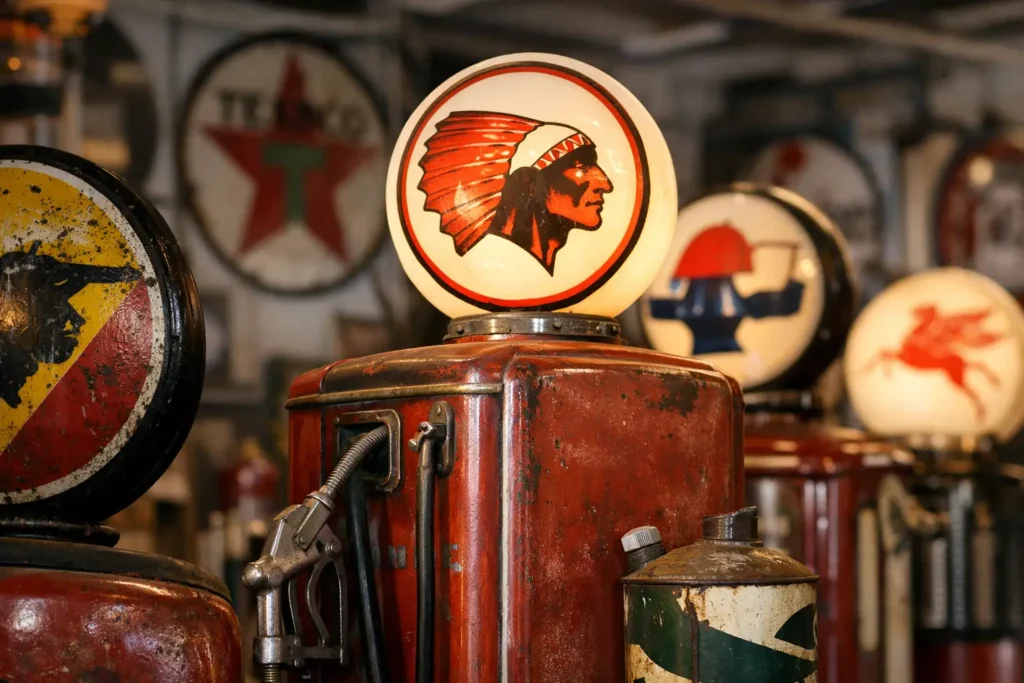
A real gas oil signs collection tells you a lot about the person behind it. Usually it means they know the difference between eye appeal and true rarity, and they are not interested in filling a wall with modern copies. These signs were built to sell fuel, motor oil, tires, batteries, and service work, but the best survivors now do something else just as well – they anchor a collection, a garage, a showroom, or a room that needs one authentic piece with some history behind it.
That is exactly why this category stays strong. Gas and oil advertising sits right at the center of American roadside culture. It connects to cars, trucks, travel, repair shops, dealerships, farm equipment, and the rise of branded service stations. When collectors talk about great vintage advertising, this is one of the first categories that comes up for a reason.
Why gas oil signs still lead the vintage advertising market
Some categories have nostalgia. Gas oil signs have nostalgia, brand power, color, and broad demand all at once. A strong Shell, Texaco, Gulf, Mobil, Sinclair, Standard, Pure, Phillips 66, or Cities Service piece does not only appeal to sign collectors. It pulls in car guys, petroliana buyers, interior designers, restaurant owners, and anyone trying to build a space with real American character.
The visual strength matters. Oil and fuel signs were made to be seen from the road, from the pump island, or from across a service bay. Bold logos, heavy porcelain, rich enamel colors, and oversized formats give these pieces presence that a lot of smaller advertising simply does not have. Even worn examples can carry serious impact because the graphics were so strong to begin with.
Then there is scarcity. The best original examples were exposed to weather, removed from stations, damaged in use, or discarded when branding changed. That means every surviving sign made it through decades of use, storage, and chance. Condition is never separate from rarity in this category. Sometimes the sign you want only exists in rough shape, and that rough shape is still desirable because almost none survived at all.
What counts as desirable in gas oil signs
Collectors new to the category often assume bigger always means better. Not necessarily. Size helps, but desirability usually comes down to a mix of brand, subject matter, format, graphics, and survival rate.
Porcelain signs lead the market for good reason. They were durable, vivid, and expensive to produce, and the best originals still show deep gloss and hard color even after decades. SSP pieces, especially double-sided examples, tend to get strong attention because they were company-issued and built for serious commercial use. Tin signs can also be highly collectible, particularly early embossed examples or pieces with outstanding graphics, but they usually live in a different pricing tier than top porcelain.
Subject matter also drives interest. A simple branded dealer sign can be excellent, but signs with strong imagery often go further. Motor oil cans, service station attendants, tires, aviation fuel, tractors, and mascots all help. Animal graphics are especially popular. Sinclair dinosaurs, Mobil Pegasus, and similar icons carry crossover appeal beyond dedicated petroliana collectors.
Regional and less common brands deserve respect too. A rare independent petroleum company sign can outperform a more familiar national brand if the survival rate is low and the graphics are right. Experienced buyers know that common names get attention, but uncommon names often build the best collections.
Porcelain, tin, and neon
If you collect by material, each type has its own appeal. Porcelain is the heavyweight. It usually offers the best durability, strongest color, and the most confidence in period manufacturing traits when untouched. Tin can be fantastic, especially where embossing, lithography, or die-cut shapes are involved. Neon sits in a class of its own because it combines advertising with industrial art. Original gas and oil neon is harder to find complete, harder to display, and often harder to keep right, but when it is real and intact, it has a presence almost nothing else can match.
How to judge authenticity without fooling yourself
This is where buyers get into trouble. The market is full of reproductions, fantasy pieces, altered signs, and old signs that have been improved past the point of honesty. Some are obvious. Some are not. If you are spending real money, you need to slow down and look past the logo.
Start with the basics. The construction should make sense for the era and intended use. Porcelain signs should show the right steel base, grommet wear, edge wear, and porcelain layering. Lettering should be correct for the brand and period. Mounting holes, flange construction, and shape should all feel right. A sign that looks too clean in the wrong places and too distressed in the right places deserves extra scrutiny.
Gloss alone does not prove anything. Chips alone do not prove age either. Reproductions can be artificially aged, and restored pieces can be made to look better than they should. You have to look at the whole piece. Does the wear flow naturally? Do the colors fit known originals? Is the backside believable? Are the dimensions and shape consistent with documented examples?
Common red flags on gas oil signs
The biggest red flag is a sign that seems to check every box too perfectly while coming from nowhere. Rare brand, great colors, light wear, low price, and no meaningful history usually adds up to one thing. Trouble.
Be careful with fantasy pieces. These are signs for real brands but in designs that never existed in period. They can look convincing to newer buyers because the logo is familiar and the distressing looks old. They are still not authentic advertising. The same goes for heavily restored pieces sold without proper disclosure. Restoration has a place, but it must be stated plainly, and it affects collector value.
This is where a specialist seller matters. Deep category experience saves buyers from expensive mistakes. A strong guarantee matters too, because confidence in originality should not be vague or implied.
Condition matters, but not in the same way on every piece
One of the biggest mistakes in the hobby is talking about condition as if it means one thing. It does not. On a common sign, condition may decide most of the value. On a rare sign, rarity may outweigh damage by a wide margin.
Porcelain condition is judged by gloss, color strength, chips, edge wear, touch-up, rust bleed, mounting damage, and whether both sides are equally strong on double-sided examples. Collectors usually prefer honest wear over hidden repair. A sign with clean original gloss and scattered chips often has more appeal than one that has been over-restored.
For tin, look at paint stability, fade, bends, extra holes, creases, and whether the embossing remains crisp. For neon, the conversation gets more complicated. Original housings, faces, transformers, and tubes all matter, but complete originality is harder to achieve because components failed over time. With neon, it often depends on whether you are buying as a pure collector, a decorator, or both.
Buying gas oil signs for display vs investment
There is overlap, but these are not always the same purchase. If you are buying for display in a garage, bar, showroom, or commercial interior, you may care most about visual punch. A sign with some chips, edge wear, or patina may actually be the right choice because it carries age honestly and still reads well from across the room.
If you are buying for long-term collector value, originality and rarity move to the front. That means fewer compromises on restoration, better attention to provenance, and more patience. The best signs are not always available when you want them. Serious collectors wait, trade, upgrade, and refine over years.
That is one reason curated inventory matters. A knowledgeable source can tell you not just whether a sign looks good, but where it stands in the category. At Road Relics, that collector-first view is the whole point. Not every old sign is a great sign, and not every expensive sign is rare.
Where seasoned collectors separate themselves
Experienced buyers learn to trust their eye, but they also learn not to trust it too much. They study original examples, compare construction details, and accept that passing on a questionable piece is often the smartest move. They also understand that category depth beats random accumulation. A focused run of authentic gas oil signs from strong brands, unusual regional companies, or a single format usually carries more weight than a wall of mixed reproductions and filler.
The best collections feel edited. They show taste, discipline, and a real understanding of what survived and why it matters. That might mean one outstanding double-sided porcelain sign instead of six average pieces. It might mean a scarce dealer flange with honest wear rather than a brighter but less important example.
That is the real appeal of this category. Gas oil signs are not just decorative leftovers from old stations and repair shops. They are original survivors from a period when American brands fought for attention with steel, enamel, glass, and light. Buy carefully, buy original, and let the piece speak for itself.