
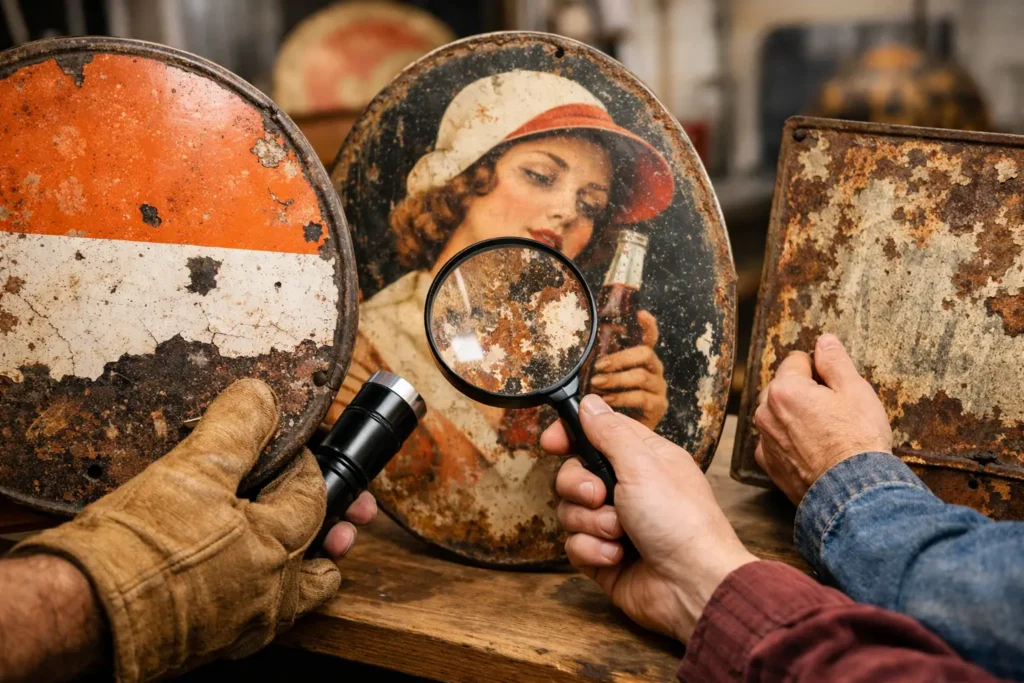
Condition is where a vintage sign stops being decoration and starts becoming a serious collectible. Anyone can spot bold color, good graphics, or a desirable name. The hard part – and the part that separates experienced buyers from expensive mistakes – is reading condition the right way. This guide to vintage sign condition is built for collectors, decorators, and buyers who want original pieces and want to know exactly what they are looking at.
A lot of people come into the hobby thinking condition should be judged like furniture or fine art. That is usually the wrong approach. Vintage signs were working objects. They hung outside gas stations, auto dealers, bottling plants, feed stores, and roadside businesses. They took weather, sun, wind, road grime, and sometimes a few shotgun pellets. Honest wear is part of the story. Damage, restoration, and alteration are a different matter.
Why condition matters more than most buyers think
Condition drives value, but not in a simple way. A rare sign with strong eye appeal can still bring serious money with chips, rust, edge wear, or fading. A common sign in excellent condition may still lag behind if the graphics are weak or supply is high. The market does not reward perfection alone. It rewards originality, scarcity, and how the sign presents on the wall.
That is why the first question is not, “Is it perfect?” It is, “Is the condition honest, stable, and original for what it is?” A 1930s porcelain gas and oil sign should not look like it came out of a modern print shop. If it does, you need to slow down.
A practical guide to vintage sign condition
When we evaluate a sign, we start with material, because porcelain, tin, cardboard, embossed metal, and neon all age differently. You cannot judge a porcelain dealership sign by the same standards as a painted wood trade sign.
Then we look at originality of surface. Original gloss, factory grommets, correct mounting holes, natural edge wear, age-consistent oxidation, and period construction all matter. After that comes damage – chips, touch-up, extra holes, bends, repairs, replaced parts, and any restoration that changes what the piece really is.
The last piece is eye appeal. Two signs can have the same amount of wear on paper and sell very differently. One may display beautifully from six feet away. The other may have all the damage in the wrong spots, right across the brand name or central graphic.
Porcelain sign condition
Porcelain is one of the most collected categories, and it is also one of the most misunderstood by newer buyers. Porcelain enamel signs were built to last, but they still chip, spider, stain, fade, and take impact. On an original porcelain sign, small edge chips and mounting wear are normal. Those are not red flags by themselves.
What matters is where the damage sits and whether it is consistent with age and use. Chips at the outer edge, around mounting holes, or along a flange can be acceptable. Large field damage in the center of the sign is another story. If the main logo, figure, or lettering is broken up by heavy chipping, value drops fast unless the sign is extremely rare.
Spidering deserves a closer look. Fine hairline cracking in the porcelain can happen naturally over time, especially on signs that lived outdoors. Heavy spidering can still be collectible, but it usually affects price. Staining around chips is often a good sign of age. Fresh-looking bare metal under a supposed old chip should make you ask questions.
Tin and painted metal signs
Tin signs and painted steel pieces tend to show wear in a softer, more blended way than porcelain. Fading, scratches, rub-through, oxidation, bends, and rust are common. Original paint matters a lot here. Once a tin sign has been overcleaned, clear coated, repainted, or heavily restored, much of the collector value can disappear.
There is a difference between light oxidation and active deterioration. Surface rust can be part of an honest look. Flaking metal, soft spots, or serious corrosion at the edges is a structural issue. For display buyers, that may still work. For collectors paying up for rarity, it needs to be factored hard into the price.
Bent signs fall into the same category. A gentle wave or slight kink from years of use is one thing. Sharp creases, folded corners, and metal fatigue are much harder to live with. Even if flattened later, the damage is still there.
Restoration versus originality
This is where buyers get burned. Not all restoration is equal, and not all of it is disclosed well. A professionally stabilized neon sign with replacement transformers may be perfectly acceptable if the important components and housing are original. A porcelain sign with filled chips, color-matched paint, and artificial wear is a different animal.
Collectors generally pay strongest for original surface. Restoration can improve appearance, but it often lowers desirability to serious buyers because it changes the object. The more extensive the work, the more caution you need. Touch-up in a border area is not the same as rebuilt porcelain in the field. A replaced neon tube is not the same as a completely reworked can with modern guts and little period substance left.
If a seller cannot explain what has been repaired, repainted, replaced, or cleaned, that is a problem. Direct answers matter. So do close photos. On high-value signs, condition should never be described in vague language alone.
What to watch for in neon sign condition
Neon brings another layer because you are judging both the sign as an object and the sign as a working piece. The metal body, paint, housing, and face all matter, but so do the tubes, electrodes, wiring, and transformer setup.
Original neon is increasingly scarce because tubes break and components get replaced over time. That does not automatically kill value. In fact, many original signs need sympathetic tube replacement to display properly. The question is how much of the sign remains period and whether the replacement work was done cleanly.
Look at the can first. Original paint, factory construction, mounting hardware, and age-consistent wear usually tell you more than the glow. Then look at the glass. Newer tubes can be acceptable. Sloppy routing, incorrect colors, or a layout that does not match the original pattern is not.
The damage that hurts value most
Some flaws are easier to forgive than others. Extra mounting holes are a big one, especially in porcelain. So are cut-down signs, heavy touch-up over the main graphic, and repairs that interrupt the original shape. On double-sided signs, mismatched wear between sides can also suggest issues, though not always. One side may simply have faced the weather harder.
Collectors also watch for overcleaning. A sign scrubbed too aggressively can lose surface character and even original paint. The result may look bright at first glance, but advanced buyers usually spot it. Old signs should not look stripped of age.
Provenance helps when condition is borderline. A fresh-to-market sign from an old collection, with known history and untouched surface, often carries more confidence than a cleaner example with too many unanswered questions.
How to judge eye appeal honestly
A sign can have problems and still be a knockout. That is the reality of the market. A hard-to-find Coca-Cola festoon, a porcelain dealership sign with strong gloss and only edge wear, or a folk art trade sign with weathered paint can all have real presence despite imperfections.
Step back and look at the sign the way it will actually be seen. Does the color still pop? Is the brand name readable? Does the wear feel right for the age? Is the damage distracting, or does it live at the margins? Good eye appeal is not about flaw-free condition. It is about whether the sign still carries the strength that made it worth saving.
Using this guide to vintage sign condition when you buy
Ask for direct, plain-spoken details. Are there extra holes? Any touch-up? Any clear coat? Any replaced parts? Any repairs to the flange, corners, or mounting areas? Does the seller stand behind originality and condition description? Those answers matter as much as the photos.
At Road Relics, that is exactly why original surface and honest condition get called out clearly. Experienced buyers do not need fairy tales. They need to know what is original, what is rare, and what they are paying for.
The best signs are not always the cleanest ones. They are the ones with real age, strong graphics, and condition that makes sense for the piece. Learn to trust honest wear, question anything that looks too fresh, and remember that the right sign does not need to be perfect to be important. It just needs to be real.